RTCA DO-160
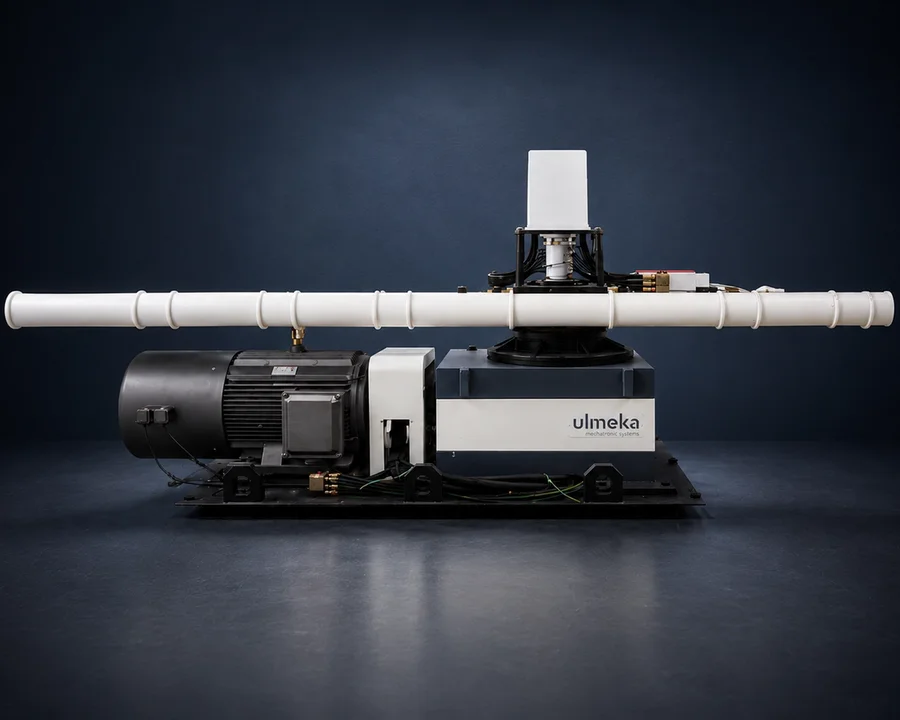
DO-160 Shock Test (Section 7) Device.
DO-160 Shock Test (Section 7) Device What is the DO-160 Shock Test? The DO-160 standard was developed to test the
DO-160 Shock Test (Section 7) Device
What is the DO-160 Shock Test?
The DO-160 standard was developed to test the environmental durability of electronic equipment used in the aerospace and aviation industries. Section 7 of this standard covers the Shock Test, which evaluates the equipment’s resistance to sudden impacts and mechanical shocks. This test is applied to analyze the effect of sudden impacts and collisions that may occur during aircraft operations on device performance.
Shock Test in the DO-160 Standard
The Shock Test defined under DO-160 Section 7 is also related to the following standards:
- IEC 60068-2-27 (Mechanical shock tests)
- MIL-STD-810H Method 516.8 (Shock tests)
- RTCA/DO-160G Section 7.0 (Shock resistance test)
These tests are applied to determine whether devices can maintain their mechanical integrity and functionality against instantaneous shocks.
Test Purpose
The Shock Test is conducted to measure the resistance of aerospace electronics to sudden impacts and collisions. It is used to assess potential risks such as connection loosening, circuit board breakage, and deformation of mechanical components.
How is the DO-160 Shock Test Conducted?
The Shock Test is carried out in the following stages:
- Preparation: The device to be tested is fixed to a shock test table.
- Shock Profile: The device is subjected to a short but high-acceleration impact.
- Acceleration Values: The test is usually performed at acceleration levels ranging from 6g to 20g.
- Shock Directions: The device is subjected to shock in different directions along the X, Y, and Z axes.
- Performance Evaluation: After the test, the device’s structural and functional integrity is checked.
Applications of the Test
The DO-160 Shock Test is applied to the following equipment:
- Aerospace electronics (avionic systems)
- Internal and external sensors
- In-flight control and monitoring systems
- Radar and navigation systems
Results of the DO-160 Shock Test
The test result evaluates the device’s mechanical integrity and operational reliability. The effects of shock on connection points, soldering areas, and mechanical parts are analyzed. Successfully passing the test indicates that the device is resistant to sudden impacts that occur during flight.
Conclusion
The Shock Test conducted under DO-160 Section 7 is critical for ensuring the safety of aerospace electronics and other essential equipment. This test guarantees that devices will be resistant to mechanical shocks they may encounter during flight.
You can contact us for more detailed information on the DO-160 Shock Test (Section 7) and to place an order in custom sizes according to your needs.
Standard reference
RTCA DO-160 Section 7 covers Operational Shocks and Crash Safety. Operational shock verifies that equipment continues to function after the shocks of normal service; it is typically applied as a terminal-peak sawtooth pulse. Crash safety verifies that equipment remains attached to its mounting (does not become a hazard) under the higher accelerations of an emergency landing, applied as a shock-impulse test and, for some categories, a sustained crash-load test. Test levels and pulse durations are selected from the equipment category in the standard.
This device applies the Section 7 shock pulses for the equipment category relevant to your installation, on the axes and orientations required by the standard.
Normes
et méthodes.
ULMEKA conçoit des systèmes d'essais
selon vos spécifications.
Si votre besoin sort de ce catalogue — dimensions de chambre sur mesure, intégration de normes combinées ou profils d'essais personnalisés — adressez-vous à notre équipe d'ingénierie.
Systèmes
associés.
VOIR LE CATALOGUE COMPLET →