
IEC 60601-1: The Ingress and Environmental Side of Medical Electrical Equipment.
IEC 60601-1 is the document medical electrical equipment is measured against. Its full title — Medical electrical equipment, Part 1: General requirements for basic safety and essential performance — names the two ideas behind it. Basic safety means freedom from unacceptable risk caused directly by the equipment. Essential performance is the performance whose loss or degradation would itself create unacceptable risk. The standard never works alone: it is read alongside the risk-management process of ISO 14971, where a manufacturer first decides what counts as acceptable.
Most of 60601-1 is about electrical hazards — leakage currents, dielectric strength, the means of protection that keep a patient clear of dangerous energy. Those clauses are checked with dedicated electrical-safety instruments, and they sit outside the scope of this article. What follows is orientation for design and quality engineers on a narrower question: where does 60601-1 touch ingress and the environment, and which other standards does it lean on to verify those parts? Different clauses, different rigs. This piece is about the second rig only.
How the 60601 family is structured
IEC 60601-1 is the general standard: it carries the requirements common to all medical electrical equipment. Around it sit the collateral standards, numbered IEC 60601-1-X, each handling an aspect that cuts across device types — the home environment is one of them, in IEC 60601-1-11. Below those are the particular standards, IEC 60601-2-X, each tailored to one type of device. A product is assessed against the general standard, the collateral standards that apply, and the particular standard for its device type, all at once. The ingress and environmental requirements we care about here are stated in the general standard, then sharpened for some equipment by a collateral standard.
The logic runs through risk. ISO 14971 asks what could go wrong and how badly; the protective measures, including protection against water and against transport extremes, exist to keep the residual risk acceptable. An IP rating in a medical file is rarely an arbitrary target. It traces back to a hazard someone identified.
The ingress touchpoints
Two parts of 60601-1 deal with things getting in: harmful ingress of water and particles, and the related but separate matter of spilt liquid.
Ingress of water and solid particles
Where harmful ingress of water or solid foreign objects is a concern, 60601-1 does not invent its own scale. It references the IP Code of IEC 60529 to classify the protection, as many other product-safety standards do. So medical electrical equipment carrying a declared IP rating is verified with the IEC 60529 apparatus that produces the conditions behind the two numerals, and, on the solids and access side, with the standardised probes of IEC 61032. The division of labour is straightforward. 60601-1 says what protection the device must provide; IEC 60529 defines the grades and conditions; IEC 61032 supplies the probes that turn a grade into a pass or a fail. None of these redefines the IP Code for medicine — the medical standard simply borrows it. On the bench, the ingress verification of a medical device looks much like that of an industrial enclosure, using the same apparatus and the same probe set. What differs is upstream: why the rating was chosen, and what counts as a failure given the device's essential performance.
Spillage
Spillage is a distinct condition, and a physical one. Medical electrical equipment that handles liquids in normal use must withstand a defined spillage without becoming unsafe — a quantity of liquid applied to the equipment under stated conditions, after which the device must still be safe, with no hazard introduced by the wetting. It is close kin to an IP water test but stands as a requirement in its own right. Liquids are part of how the device is used, so it has to tolerate the spill that use makes likely. The exact volume, pour and dwell are fixed in the standard text; read them there rather than guessing. The point worth holding onto is that spillage is a deliberate liquid-exposure condition, separate from the declared IP rating.
The environmental touchpoints
The second cluster of requirements is about the world the device lives in rather than what gets into it: the climate it must survive, and the knocks of being carried about.
Home healthcare and the IP21/IP22 minimum
The clearest case of an IP rating mandated from above sits in the collateral standard IEC 60601-1-11, which covers medical electrical equipment used in the home healthcare environment. A home is not a clinic. There is no biomedical engineering department on hand, the user is often the patient, and ordinary domestic mess is routine. To answer that, 60601-1-11 sets a minimum ingress protection of IP21 for such equipment. In IP Code terms, that means protection against a finger-sized object and against vertically dripping water. Where the equipment could face dripping water while tilted, the minimum is raised to IP22. This is a useful example because it shows a collateral standard turning a general concern into a specific, testable IP floor. A device intended for the home does not get to declare a lower grade; the collateral standard sets the bar, and IEC 60529 and IEC 61032 verify that the device clears it.
Transport and storage conditioning
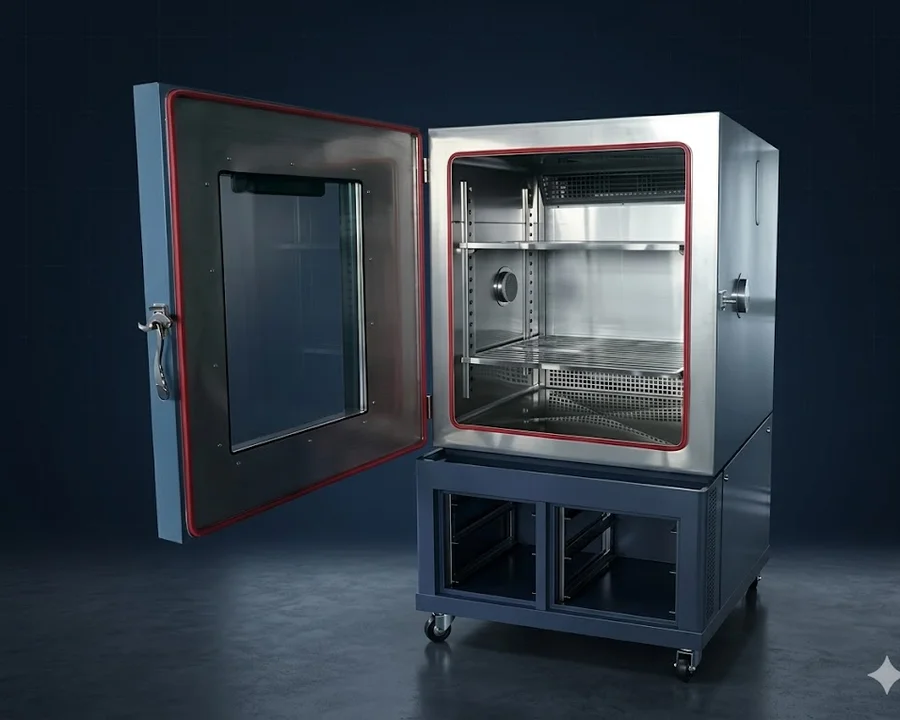
A medical device spends part of its life switched off, boxed and moving — in a lorry, a warehouse, an unheated loading bay. 60601-1, and 60601-1-11 for home equipment, address the temperature and humidity ranges, and for some equipment the pressure ranges, that a device must tolerate during transport and storage and still work correctly afterwards. This is the natural domain of climatic and environmental chambers, and the test methods are typically drawn from the IEC 60068-2 series that the wider environmental-testing world already uses. The medical standard states the conditions the device must survive; IEC 60068-2 supplies the method by which a chamber reproduces them. The specific limits — how cold, how humid, how low the pressure, and for how long — belong to the standard and to the manufacturer's declared conditions.
Mechanical robustness for portable and home equipment
A further concern overlaps with the climate one. Home and portable medical electrical equipment must also stand up to being carried, set down and knocked, and the mechanical-robustness conditions for such equipment overlap with general environmental ruggedness testing. For planning, the thing to remember is simple: portable and home devices carry obligations a bench-bound clinical instrument does not.
Planning the ingress and environmental work
A handful of points keep this part of a 60601-1 programme honest.
- Separate the two test families early. Electrical-safety verification and ingress/environmental verification use different instruments and, often, different laboratories. Knowing which clauses fall on which side stops a plan from assuming one rig can do both.
- Let the device type and use environment set the IP grade. The general standard references IEC 60529, but the actual floor often comes from a collateral or particular standard — IP21 or IP22 for home equipment under 60601-1-11 being the clearest instance. Read the standard that applies to your device.
- Treat spillage as its own condition. A declared IP rating does not discharge the spillage requirement, and vice versa. If the equipment handles liquids, plan the spillage exposure separately from any water-ingress test.
- Pin down the transport and storage envelope. The temperature, humidity and, where relevant, pressure ranges the device must endure come from the standard and from the manufacturer's own declared conditions. Those declared limits then become the chamber settings, run by the IEC 60068-2 methods.
- Keep verification traceable. Whether the figure is an IP grade, a spillage volume or a storage temperature, it should trace back through the applicable medical standard to the hazard it addresses, and the test record should name the apparatus and its calibration status.
Where ULMEKA fits
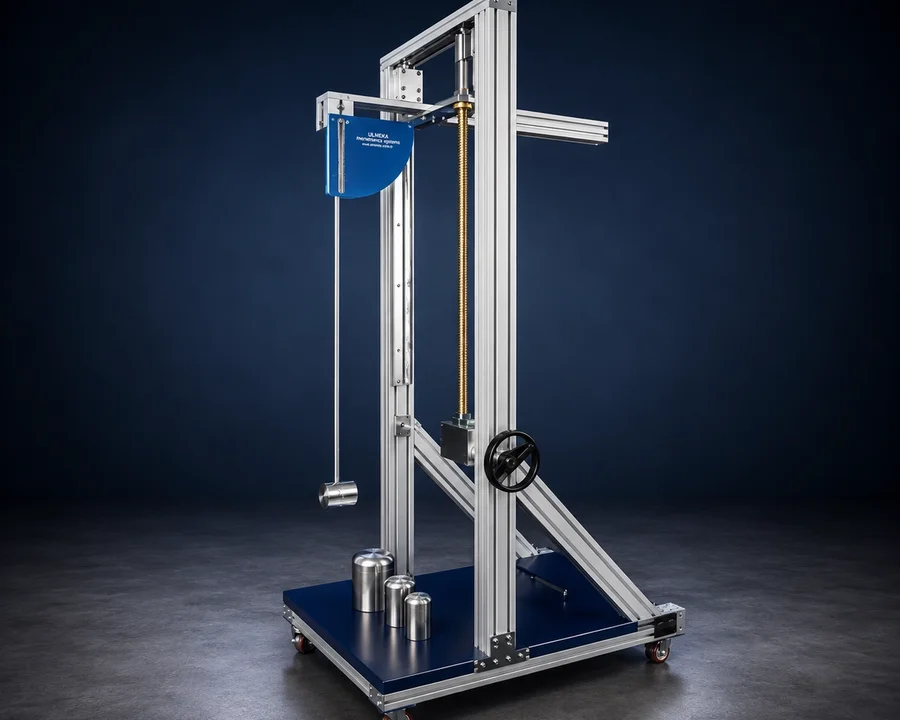
ULMEKA Mechatronics designs and manufactures the equipment used to verify the ingress and environmental-conditioning requirements that 60601-1 and its collateral standards invoke. Not the electrical-safety side. On the ingress side that means the full IP test family: water rigs across the IPX1 to IPX9K range, dust chambers for the IP5X and IP6X levels, and the IEC 61032 access and object probe set the IP Code relies on. On the environmental side it means the climatic and environmental chambers that reproduce transport and storage conditions by the IEC 60068-2 methods. ULMEKA does not manufacture electrical-safety test instruments such as leakage-current or dielectric testers, and it is not an accredited testing laboratory. The equipment supports the ingress and environmental clauses; electrical-safety verification, accreditation and the medical certification decision rest with others. For a medical-device team the useful starting point is a short list: the IP grade the applicable standard sets, whether a spillage condition applies, and the transport and storage envelope to be reproduced. Settle those three and the equipment list mostly writes itself — water rig, dust chamber, climatic chamber, or some combination.
Related test systems.
Test Systems →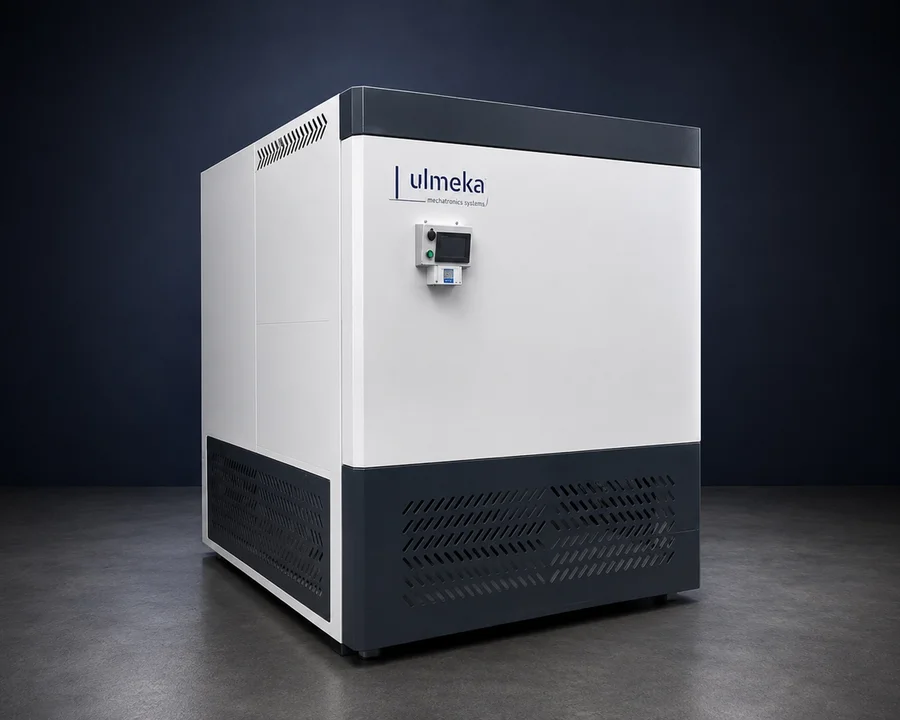
Frequently asked questions.
Does IEC 60601-1 cover electrical safety as well as ingress and environmental testing?
Yes, and most of it concerns electrical hazards: leakage currents, dielectric strength and the means of protection that keep a patient clear of dangerous energy. That side is verified with dedicated electrical-safety instruments and is deliberately outside the scope of this article. This piece covers only where 60601-1 touches ingress and the environment, which uses a different family of test equipment.
How does IEC 60601-1 verify ingress protection?
It does not invent its own scale. Where harmful ingress of water or solid foreign objects is a concern, 60601-1 references the IP Code of IEC 60529 to classify the protection. Equipment with a declared IP rating is then verified with the IEC 60529 apparatus that produces the conditions behind the two numerals, and, on the solids and access side, with the standardised probes of IEC 61032. The medical standard says what protection is required; 60529 and 61032 say how it is checked.
What is the spillage requirement, and is it the same as an IP water test?
Spillage is a distinct, physical condition. Medical electrical equipment that handles liquids in normal use must withstand a defined spillage, a quantity of liquid applied to the equipment under stated conditions, and still be safe afterwards, with no hazard introduced by the wetting. It is close kin to an IP water test but a requirement in its own right, so a declared IP rating does not discharge it and vice versa.
Why does IEC 60601-1-11 require a minimum of IP21 or IP22?
IEC 60601-1-11 is the collateral standard for medical electrical equipment used in the home healthcare environment, where there is no biomedical engineering department and ordinary domestic mess is routine. To answer that, it sets a minimum ingress protection of IP21, which in IP Code terms means protection against a finger-sized object and vertically dripping water, raised to IP22 where the equipment could face dripping water while tilted. It is a concrete case of a collateral standard mandating a specific, testable IP floor.
How are transport and storage environmental conditions tested?
60601-1, and 60601-1-11 for home equipment, address the temperature and humidity ranges, and for some equipment the pressure ranges, that a device must tolerate during transport and storage. These are reproduced in climatic and environmental chambers, with the test methods typically drawn from the IEC 60068-2 series that the wider environmental-testing world already uses. The medical standard states the conditions to survive; IEC 60068-2 supplies the method a chamber uses to reproduce them.
Does ULMEKA perform medical or electrical-safety testing?
No. ULMEKA designs and manufactures the IP ingress test equipment (water rigs across IPX1 to IPX9K, dust chambers for IP5X and IP6X, and the IEC 61032 probe set) and the climatic and environmental chambers used to verify the ingress and environmental-conditioning requirements that 60601-1 and its collateral standards invoke. It does not manufacture electrical-safety instruments such as leakage-current or dielectric testers, and it is not an accredited testing laboratory; electrical-safety verification, accreditation and the certification decision rest with others.
ULMEKA engineers test systems
to specification.
If your requirement is outside this catalogue — custom chamber sizes, combined-standard integration, or tailored test profiles — talk to our engineering team.