MIL-STD-810H
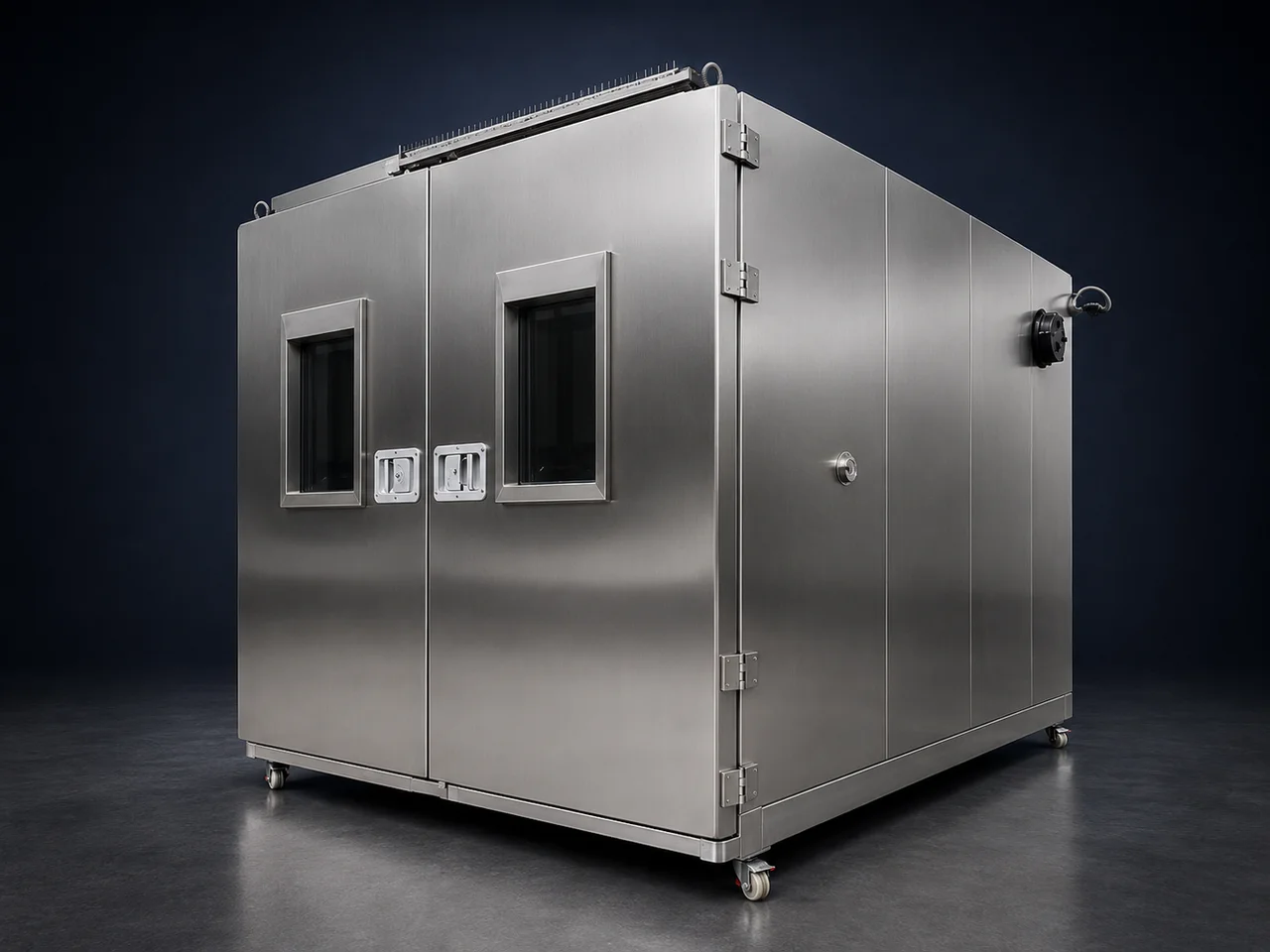
MIL-STD-810H Low Pressure / Altitude (Method 500.6) Test Machine.
MIL-STD-810H (Method 500.6) Low Pressure / Altitude MIL-STD-810G (Method 500.5) Test Machine The Low Pressure / Altitude Test Machine (MIL-STD-810H
MIL-STD-810H (Method 500.6) Low Pressure / Altitude
MIL-STD-810G (Method 500.5) Test Machine
The Low Pressure / Altitude Test Machine (MIL-STD-810H Method 500.6) is designed to evaluate the performance of devices under low atmospheric pressure and high altitude conditions. This test is particularly important for applications in military, aerospace, space, and transportation industries, where equipment is exposed to extreme altitude conditions.
1. Scope
This method is designed to test the operability and durability of military equipment in low-pressure (high-altitude) environments.
- Purpose: To determine the resistance of equipment to low-pressure conditions and its response to rapid pressure changes.
- Application:
- Testing equipment stored or operated in high-altitude regions.
- Evaluating equipment transported or used in pressurized or non-pressurized aircraft compartments.
- Determining the effects of rapid or explosive decompression.
- Testing materials externally carried on aircraft.
- Limitations:
- Not applicable for altitudes above 21,300 m (70,000 ft).
- Not suitable for spacecraft, high-altitude aircraft, or missiles.
2. Tailoring Guidance
This section explains how to customize the test and integrate it with other test methods.
- Effects of Low-Pressure Environments:
- Physical/Chemical Effects:
- Leakage of gas or liquid from seals and sealing systems.
- Deformation, rupture, or leakage of sealed containers.
- Evaporation of lubricants.
- Overheating due to reduced heat transfer.
- Electrical Effects:
- Arcing and corona discharge due to low pressure.
- Physical/Chemical Effects:
- Sequence Among Other Methods:
- Can be applied after high and low-temperature tests.
- If vibration tests have been performed, structural integrity should be evaluated before this test.
3. Information Required
This section details the data that must be collected before, during, and after testing.
- Pre-Test:
- Test altitude and pressure values must be defined.
- Temperature, pressure, and humidity sensors should be properly placed.
- During Test:
- Pressure variations and temperature conditions must be recorded.
- Post-Test:
- The mechanical, electrical, and physical performance of the equipment must be analyzed.
4. Test Process
The step-by-step procedure for conducting the test is explained.
- Test Facility:
- A pressure-controlled chamber is required for the test.
- Temperature and humidity conditions must remain stable.
- Test Methods:
- Method I – Storage/Air Transport:
- Simulates storage conditions in high-altitude areas or during air transport.
- Method II – Operation/Air Transport:
- Used to evaluate the effects of low pressure during operation.
- Method III – Rapid Decompression:
- Assesses the impact of sudden pressure drops on equipment.
- Pressure is reduced from 8,000 ft (2,438 m) to 40,000 ft (12,192 m) within a maximum of 15 seconds.
- Method IV – Explosive Decompression:
- Applies an instant (less than 0.1-second) pressure change.
- Specifically used for cockpit equipment.
- Method I – Storage/Air Transport:
5. Analysis of Results
- The durability of the tested equipment against low pressure and rapid pressure changes is evaluated.
- Mechanical and electrical malfunctions are analyzed.
- Additional tests may be required for critical systems.
6. Reference Documents
- MIL-HDBK-310: Global Climatic Data.
- NATO STANAG 4370: Environmental Testing Standards.
- AR 70-38: Military Equipment Testing for Extreme Climatic Conditions.
MIL-STD-810H Method 500.6 – Low Pressure Test Summary
This test is conducted to evaluate how military equipment performs in low-pressure (high-altitude) environments.
Test Process:
- Storage and Transport (Methods I & II): Simulates high-altitude and air transport conditions.
- Rapid and Explosive Decompression (Methods III & IV): Evaluates the durability of equipment against sudden pressure drops.
Effects Measured:
- Seal leaks, mechanical deformations due to pressure changes.
- Electrical failures (arcing, corona discharge), lubricant evaporation.
- Potential hazards caused by sudden pressure changes.
Final Assessment:
- The collected data is used to determine the long-term resistance of equipment to low-pressure conditions.
- It is a critical test procedure for aircraft, military vehicles, and high-altitude equipment.
Key Features
Feature Value / Description Pressure Range 0.1 mbar – 1013 mbar (simulating altitude conditions from sea level and beyond) Altitude Simulation 0 – 30,000 meters (custom higher altitudes can be simulated) Temperature Control Range -70°C to +150°C (expandable range upon request) Humidity Control 10% – 98% relative humidity (optional integration available) Rapid Pressure Change Rate 10 mbar/s to 300 mbar/s (adjustable rates available upon request) Cabinet Volume 50 L – 1000 L (available in various sizes to suit product dimensions) Control System Fully automated PLC-based system with touch screen user interface Power Requirements 220V AC, 50 Hz or 380V AC, 50 Hz (depending on device size) Monitoring and Logging Real-time data logging, remote monitoring of test parameters (LAN/USB connectivity) Test Modes Storage, Operating, Rapid Pressure Change Material Stainless steel internal structure, high durability insulation materials Safety Features Automatic cutoff for pressure and temperature limits, emergency stop button Optional Features Humidity measurement and control system, test monitoring with cameras, customizable altitude profiles
Benefits
- Simulates extreme environmental conditions to the most realistic extent.
- Provides critical data on product durability and reliability under high-altitude and low-pressure scenarios.
- User-friendly interface with full automation simplifies the testing process.
Application Areas
- Military Equipment: Tests for equipment operating in high-altitude and low-pressure regions (e.g., military aircraft, satellites).
- Aerospace: Ensures the reliability of components in extreme altitude conditions.
- Transportation: Used to assess the performance of transportation equipment, particularly those operating at high altitudes.
For more detailed information about the MIL-STD-810H (Method 500.6) Low Pressure / Altitude Test Machine or to place an order, please contact us!
Standard reference
MIL-STD-810H Method 500.6 defines Low Pressure (Altitude) procedures: Storage/Transportation, Operation and Rapid Decompression (and Explosive Decompression for some items). The simulated altitude, dwell time and decompression rate are selected from the platform’s operational and logistic profile.
Normes
et méthodes.
ULMEKA conçoit des systèmes d'essais
selon vos spécifications.
Si votre besoin sort de ce catalogue — dimensions de chambre sur mesure, intégration de normes combinées ou profils d'essais personnalisés — adressez-vous à notre équipe d'ingénierie.
Systèmes
associés.
VOIR LE CATALOGUE COMPLET →