
Salt Fog & Corrosion Testing — ASTM B117, MIL-STD-810 Method 509 and DO-160 Section 14.
Salt and moisture corrode metals, undermine coatings, and seize moving parts and electrical contacts. Salt-fog testing exposes a product to a controlled saline mist so corrosion shows up in the lab instead of in the field. Three frameworks dominate: ASTM B117, the baseline industrial salt-spray test; MIL-STD-810 Method 509, the defense cyclic salt fog; and DO-160 Section 14, the avionics salt-mist test.
What corrosion testing reveals
- Coating breakdown — red rust on steel, white corrosion on zinc and aluminium, blistering, and creep spreading from a scribe line.
- Galvanic corrosion — accelerated attack where dissimilar metals meet.
- Mechanical and electrical failure — seized hinges and fasteners, degraded connectors and contacts, and loss of function, not just appearance.
ASTM B117 (Neutral Salt Spray)
ASTM B117 is the baseline and the most widely used corrosion screen. A 5% sodium-chloride solution is atomized into a continuous fog inside a chamber held at 35 °C, with the fog fall-out controlled to 1–2 mL per 80 cm² per hour and the solution kept at a neutral pH of 6.5–7.2. Exposure runs from 24 hours to well over 1000, depending on the specification, and results are judged by visual inspection against a grading scheme. Its great strength is consistency — it repeats well from lab to lab — but it is continuous and uniform, so it does not closely reproduce real outdoor corrosion.
MIL-STD-810 Method 509 (Salt Fog)
Method 509 uses the same 5% salt solution and 35 °C, but alternates salt-fog and drying phases rather than spraying continuously, typically over 48–96 hours. The wet-dry cycling is what makes it more representative: corrosion often accelerates during the transitions between wet and dry, which a constant spray never captures.
DO-160 Section 14 (Salt Spray / Salt Mist)
Section 14 is the salt-mist exposure for airborne equipment, verifying that avionics, connectors and housings resist the corrosive, salt-laden atmospheres found in coastal and maritime aviation.
Continuous vs cyclic — choosing
The distinction that matters is continuous versus cyclic. ASTM B117's continuous spray is ideal as a comparative quality-control gate and for material certification. Cyclic methods — MIL-STD-810 Method 509, and automotive cyclic corrosion tests such as ISO 16701 or SAE J2334 — better reproduce the wet-dry-humid sequence of real service. Choose by purpose: a repeatable QC benchmark, or a field-representative durability test. Pick the procedure that matches your failure mode, not the one with the largest hour count.
Testing with ULMEKA
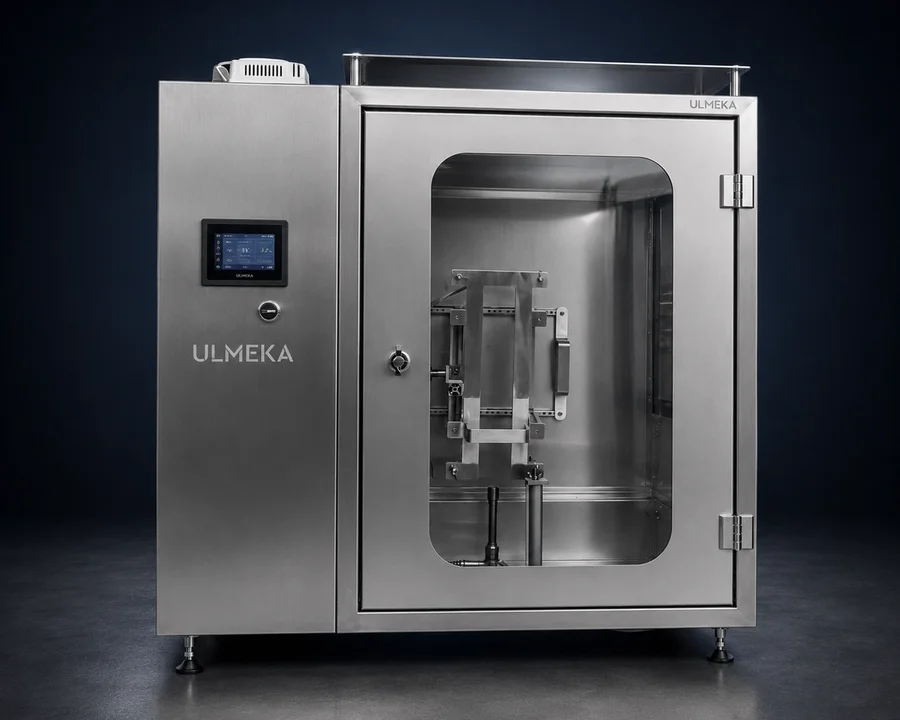
ULMEKA designs salt-fog and corrosion test systems — continuous or cyclic — under PLC + HMI control with regulated temperature, solution concentration and fall-out rate. Whether your requirement is ASTM B117, MIL-STD-810 Method 509 or a DO-160 category, tell us the standard, the duration and your specimen dimensions, and we will propose a matched system.
Related test systems.
Test Systems →
Frequently asked questions.
What is the difference between ASTM B117 and MIL-STD-810 Method 509 salt fog testing?
Both use a 5% sodium-chloride solution at 35 °C. The difference is the spray pattern: ASTM B117 keeps a continuous, uniform fog going, while Method 509 alternates salt-fog and drying phases, typically over 48 to 96 hours. That wet-dry cycling matters because corrosion often accelerates during the transitions between wet and dry, which a constant spray never captures.
What are the test conditions for an ASTM B117 salt spray test?
ASTM B117 atomizes a 5% sodium-chloride solution into a continuous fog inside a chamber held at 35 °C, with fall-out controlled to 1–2 mL per 80 cm² per hour and the solution kept at a neutral pH of 6.5–7.2. Exposure lasts anywhere from 24 hours to well over 1000, depending on the specification. Results are judged by visual inspection against a grading scheme.
How long does a salt fog test take?
Anywhere from 24 hours to well over 1000 under ASTM B117, depending on the specification. MIL-STD-810 Method 509 typically runs 48 to 96 hours, alternating salt-fog and drying phases instead of spraying continuously. Pick the procedure that matches your failure mode, not the one with the largest hour count.
When should I use a cyclic corrosion test instead of continuous salt spray?
Continuous spray such as ASTM B117 works as a comparative quality-control gate and for material certification. It repeats well from lab to lab but does not closely reproduce real outdoor corrosion. When you need a field-representative durability test, switch to a cyclic method: MIL-STD-810 Method 509, or automotive tests such as ISO 16701 and SAE J2334, which better reproduce the wet-dry-humid sequence of real service.
What does DO-160 Section 14 salt spray testing verify?
DO-160 Section 14 is the salt-mist exposure for airborne equipment: it verifies that avionics, connectors and housings resist the corrosive, salt-laden atmospheres found in coastal and maritime aviation. Together with ASTM B117 and MIL-STD-810 Method 509, it is one of the three frameworks that dominate salt-fog testing.
What types of failure does salt fog testing reveal?
Salt fog exposure brings out coating breakdown: red rust on steel, white corrosion on zinc and aluminium, blistering, and creep spreading from a scribe line. It also reveals galvanic corrosion, the accelerated attack where dissimilar metals meet. The damage is not just cosmetic: hinges and fasteners seize, connectors and contacts degrade, and function is lost.
ULMEKA engineers test systems
to specification.
If your requirement is outside this catalogue — custom chamber sizes, combined-standard integration, or tailored test profiles — talk to our engineering team.