
Which IP Rating Does Your Product Actually Need? A Selection Guide That Saves Reruns.
Most IP conversations start at the wrong end. Someone reads that a competitor's enclosure is IP65, decides the new product should be "at least that," and writes IP65 into the spec before anyone has asked what the thing will actually face. The honest question is never "what is IP65." It is "which class does my product, in its environment, genuinely require — and how do I prove that to a customer, an auditor, or my own QA without paying for the test twice." IEC 60529 gives you a precise vocabulary for the answer. It does not make the decision for you, and it certainly does not forgive a class chosen by imitation. This article is about making that decision deliberately, and about the handful of misreadings that turn a clean selection into an expensive rerun.
The two digits, read as decisions rather than definitions
The IP code is two numerals: the first for solids and dust, the second for water. Everyone can recite that. The useful version is to read each step as something you are buying for the product, because each step costs design effort, sealing, and test time.
The first digit runs 0 to 6. Up through 4 it is mostly about access — keeping out fingers, tools, and wires of decreasing diameter, which is as much a safety question as an ingress one. The two steps that matter for environmental selection are the top two. 5 means dust-protected: dust may enter, but not in a quantity that interferes with operation or safety. 6 means dust-tight: no ingress at all. The jump from 5 to 6 is not a small refinement. A 5 lets you accept a little dust as long as the product keeps working; a 6 commits you to a fully sealed enclosure that survives a vacuum-assisted dust chamber with nothing inside. Specifying 6 when 5 would do is one of the quieter ways to overspend on gaskets and assembly.
The second digit runs 0 to 9K and is where the real money lives. Each step buys a specific kind of water exposure: dripping (1 and 2), spraying at an angle (3), splashing from any direction (4), low-pressure jets (5), powerful jets (6), temporary immersion to a defined depth and time (7), continuous immersion under conditions agreed with the manufacturer (8), and high-pressure, high-temperature close-range jets (9K, drawn in from the automotive world). The thing to internalise is that these are not a smooth ramp of "more waterproof." They are different exposures, and that distinction is the source of the most expensive mistake in the whole code — which we will get to.
Matching the environment to a class
Before any test, you can usually narrow the field by being honest about where the product lives. The mappings below are typical starting points, not rules; the actual class should follow from a real exposure assessment and any sector standard that applies to you.
- Indoor, dry electronics (cabinets, controllers in clean rooms): ingress is rarely the driving concern. A low first digit for access safety and a low or zero second digit is typically enough. Paying for IP6X here usually buys nothing.
- Outdoor enclosure exposed to rain (signage, telecom, street furniture): typically IP65 or IP66 territory — dust-protected or dust-tight, plus resistance to jets, which covers wind-driven rain and the occasional hose far better than a "splash" rating does.
- Washdown, food, and hygiene areas (high-pressure cleaning): the cleaning regime drives this, not the weather. Equipment hosed down daily typically needs at least IPX6, and often a dust-tight first digit, so IP66 is a common floor.
- Dusty industrial settings (mills, quarries, woodworking): the first digit leads. IP5X is the typical minimum where some dust is tolerable; IP6X where dust must be kept out entirely, paired with a water digit that reflects any washdown.
- Occasional immersion (handheld instruments, devices that may be dropped in water): IPX7 covers a defined temporary dunk. But read the next section before you stop there.
- Continuous or repeated submersion (submersible pumps, fixed underwater gear): IPX8, whose depth and duration are agreed between you and the manufacturer rather than fixed by the standard.
- Automotive and off-highway, high-pressure plus temperature: IPX9K, and in practice the automotive code under ISO 20653 (often written IP6K9K), which uses its own road-realistic exposures.
The mistakes that cost a rerun
This is the part worth slowing down for, because every item here is a reading error, and reading errors are cheap to avoid and expensive to discover at the marking stage.
The water digit is not a hierarchy. This is the single most costly misread in the code. A higher second digit does not contain the lower ones. IPX7 — temporary immersion — does not imply IPX5 or IPX6 protection against jets. The immersion test and the jet test challenge the enclosure in physically different ways: a seal that survives being held under still water can leak under the directed force of a nozzle, and vice versa. A product that will face both jets and immersion must be tested and marked for both, and the standard provides exactly that notation: a dual mark such as IPX6/IPX7. A lone IPX7 on a product that also gets hosed down is not a stricter rating — it is an untested gap, and it is the failure that most often surfaces during a customer audit rather than during your own testing.
"Waterproof" is not an IP grade. It is a marketing word with no defined test behind it, and it over-promises by design. IP states protection under defined conditions — a specified pressure, depth, duration, and nozzle. It is a statement about a test, not a guarantee about the ocean, a pressure washer, or a decade of weather. Treat any datasheet that says "waterproof" without an IP code and a test reference as making no claim at all; the defensible phrasing is that the product is protected against water ingress under specified test conditions.
The X is not a free pass. When you see IPX5, the X means the first digit was not declared — usually because solids and dust were not tested, not that the product is somehow protected against them. Likewise IP5X says nothing about water. Never read an X as "at least passing." It means "not stated," and an unstated digit is a digit you cannot rely on.
A marketed IP number is only as good as the test behind it. A code on a datasheet is a claim. Without a test report tying it to the right apparatus, the right sample condition, and the right pass criteria, it is a number, not evidence. When you specify a class, specify the proof alongside it.
IK is not IP. Impact resistance is a separate standard — IEC 62262, expressed as an IK code — and it answers a different question: how hard a knock the enclosure survives, not what it keeps out. An enclosure can be IP66 and mechanically fragile, or rugged and poorly sealed. Don't let one stand in for the other; if you need both, specify both.
How a class is actually verified
Every figure in the code maps to a specific piece of apparatus, and this is where the abstract notation becomes a physical test. Knowing the rigs helps you specify sensibly, because each one has its own setup, sample preparation, and pass criteria.
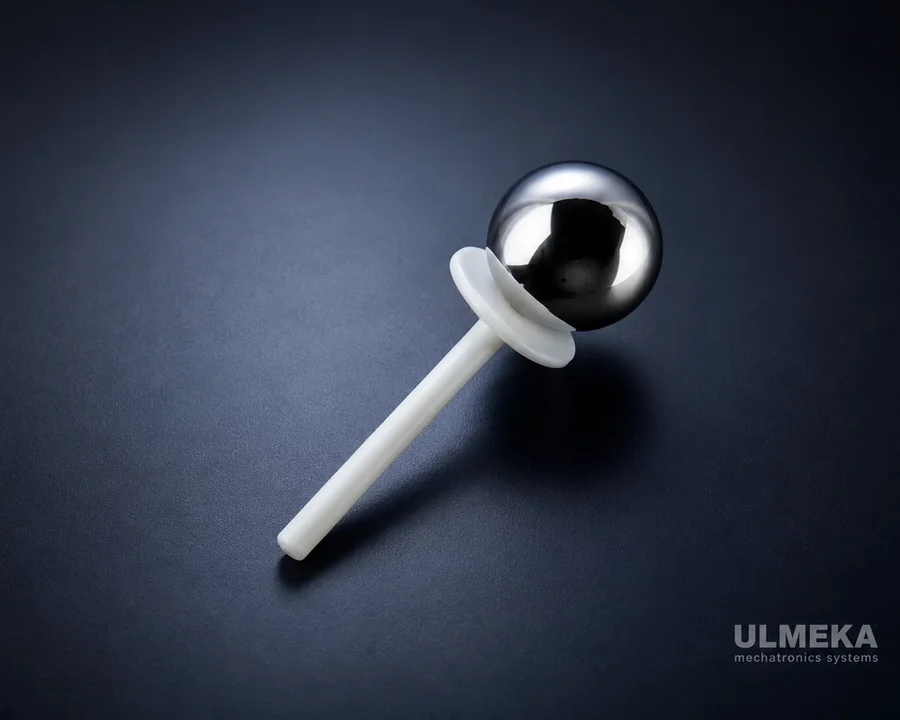
The first digit, at 5 and 6, is checked in a dust chamber: talcum powder is circulated around the sample while, for many enclosure categories, a vacuum draws a slight depression inside to simulate breathing. IP5X passes if dust does not enter in a harmful quantity; IP6X passes only if it does not enter at all. The lower first digits, the access ones, are verified not with dust but with standardised access probes — the jointed test finger and the rigid wires of IEC 61032 — which double as the safety check that hazardous parts stay out of reach.
The second digit climbs through its own family of rigs. IPX1 and IPX2 use a drip box that rains calibrated drops straight down, with the sample tilted for the 2. IPX3 and IPX4 use an oscillating tube or a hand-held spray that sweeps water across a defined arc — spraying for the 3, full splashing for the 4. IPX5 and IPX6 move to nozzles: a smaller bore for the 5, a powerful jet for the 6, each at a defined flow, distance, and duration. IPX7 and IPX8 use an immersion tank — a fixed depth and time for the 7, manufacturer-agreed conditions for the 8. IPX9K needs a heated, high-pressure jet delivered at close range from several fixed angles, the harshest water test in the family, which is why it migrated in from automotive practice. For road vehicles specifically, ISO 20653 defines its own dust and water regimes and the IP6K9K marking that goes with them.
From requirement to evidence
The clean way to run this is to treat the IP class as an output, not an input. Start from the environment, the cleaning regime, and any sector standard you are bound by; let those settle the two digits and tell you whether you need a dual mark. Then specify the proof in the same breath as the class — which apparatus, which sample condition, which pass criteria — so that "IP66/IP67" on your label is backed by a report rather than an aspiration.
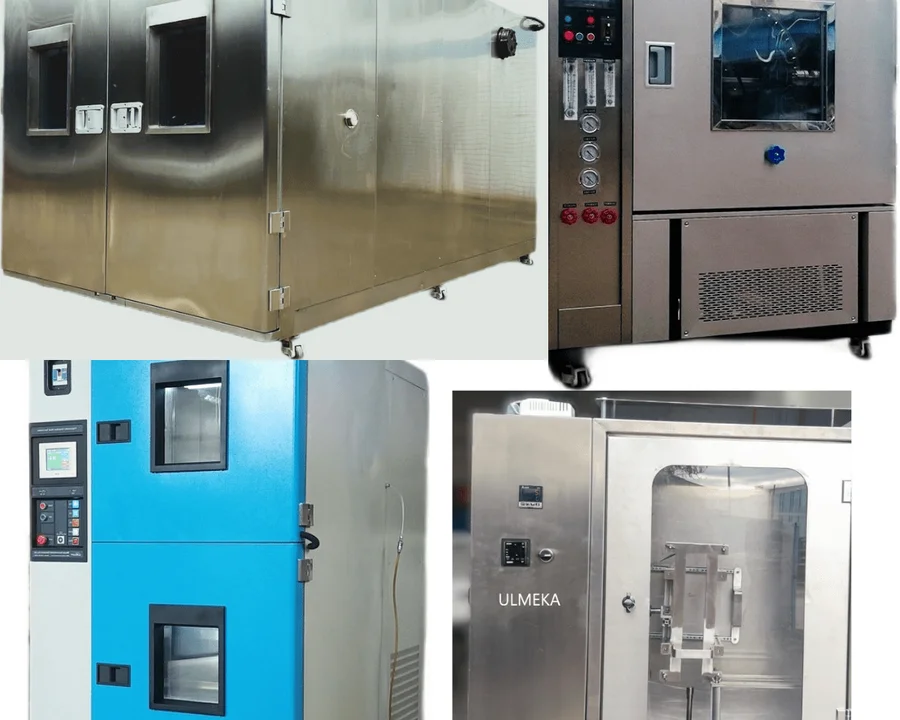
ULMEKA sits at the second half of that sentence. We design and build the rigs behind every figure in the code: dust chambers for IP5X and IP6X, drip boxes for IPX1 and IPX2, oscillating-tube and spray equipment for IPX3 and IPX4, jet nozzles for IPX5 and IPX6, immersion tanks for IPX7 and IPX8, and heated high-pressure jet rigs for IPX9K, alongside the IEC 61032 access probes for the first digit and the safety checks. Because we build them, we can also run the verification on them. If you are still narrowing the class, our IP rating selector walks the same environment-to-class logic above and is a sound place to pressure-test a number before you commit it to a drawing. Bring the environment; we will help you turn it into a class you can defend with evidence.
Related test systems.
Test Systems →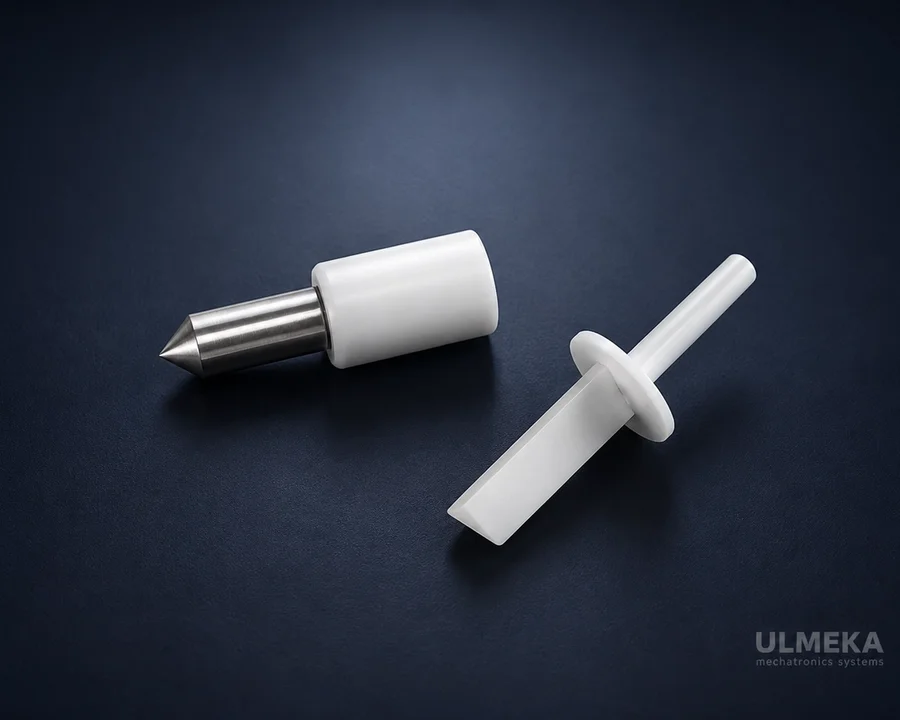
Frequently asked questions.
Is IP65 or IP67 the right choice for my product?
It depends on the exposure, not on which number sounds higher. IP65 means dust-tight plus protection against low-pressure jets, which suits outdoor enclosures facing rain and the occasional hose. IP67 means dust-tight plus temporary immersion to a defined depth and time, which suits products that might be dropped in water. They protect against different things, so if your product faces both jets and immersion you need both ratings, not just the higher-looking one.
Does an IPX7 rating mean my product is also protected against water jets?
No, and assuming it does is the most expensive mistake in the IP code. The water digit is not a hierarchy: IPX7 covers temporary immersion in still water, but it does not imply IPX5 or IPX6 protection against directed jets. A seal that survives a dunk can leak under a nozzle. A product exposed to both must be tested and marked for both, for example as IPX6/IPX7.
What is the difference between a dust-protected and a dust-tight rating?
The first digit 5 means dust-protected: dust may enter but not in a quantity that interferes with operation or safety. The first digit 6 means dust-tight: no dust ingress at all. The step from 5 to 6 is significant because 6 commits you to a fully sealed enclosure that passes a vacuum-assisted dust chamber, so specifying 6 where 5 would do can mean overspending on sealing and assembly.
Is 'waterproof' the same as an IP rating?
No. 'Waterproof' is a marketing word with no defined test behind it, and it over-promises. An IP rating states protection under specific, defined conditions such as a set pressure, depth, duration, and nozzle. It is a statement about a controlled test, not a guarantee against a pressure washer or years of weather. Treat any datasheet that claims 'waterproof' without an IP code and a test reference as making no real claim.
What does the X mean in a rating like IPX5?
The X means that digit was not declared, usually because it was not tested. IPX5 says nothing about solids and dust protection, and IP5X says nothing about water. An X is not a free pass or an 'at least passing' guarantee; it means 'not stated,' and an unstated digit is one you cannot rely on. If you need both kinds of protection, both digits must be tested and declared.
How is an IP class actually tested?
Each figure maps to specific apparatus. The first digit at 5 and 6 uses a dust chamber with circulated talc and, for many enclosures, a slight internal vacuum, while lower digits use IEC 61032 access probes. For water, IPX1 and IPX2 use a drip box, IPX3 and IPX4 an oscillating tube or spray, IPX5 and IPX6 jet nozzles, IPX7 and IPX8 an immersion tank, and IPX9K a heated high-pressure close-range jet. Automotive products follow ISO 20653, marked IP6K9K. ULMEKA builds these rigs and can run the verification on them.
ULMEKA engineers test systems
to specification.
If your requirement is outside this catalogue — custom chamber sizes, combined-standard integration, or tailored test profiles — talk to our engineering team.