
IEC 60068-2 Environmental Test Methods — Choosing Method, Procedure and Severity.
Most of the environmental standards engineers reach for every day are, on close reading, anthologies. MIL-STD-810 has its method numbers, RTCA DO-160 its sections, ISO 16750 its parts, and each prescribes the climate, vibration and shock loads a product must survive. But trace the actual procedure down to the level of which stress to apply, at what level, ramped at what rate, repeated how many times, and a large share of those frameworks stop redefining anything and point to a common reference. That reference is IEC 60068-2, the international series of environmental test methods for electrotechnical products.
The unusual character of the series is worth stating plainly, because it shapes how you read it. IEC 60068-2 does not tell you whether your product must pass. It does not assign your equipment to a category, and it does not set a pass/fail limit. It tells you only how to run a given environmental test so that the result is repeatable: what stress to apply, how to apply it, and how tightly the instrumentation must hold its tolerances. Which methods apply, and how severe they should be, belongs to the product committee, the procurement specification or the end user. Read in isolation, a 60068-2 part can feel oddly incomplete, all method and no verdict. That is by design. It is a toolbox, and the verdict comes from whoever picked the tools.
The division of labour with neighbouring standards
Seen as a toolbox, the series sits below the better-known qualification standards rather than competing with them. IEC 60068-1 carries the general principles, the shared terminology and the guidance on selecting severity. The "-2-x" parts are the individual test methods, the climatic, mechanical and combined procedures that do the work. The "-3-x" parts are supporting and background material. Nearly everything an engineer reaches for during a test campaign lives in the "-2" tier.
The frameworks that reference it each draw their own boundaries. MIL-STD-810 governs defence environmental qualification, and many of its methods either cite a 60068-2 procedure or define a parallel one on the same principles. RTCA DO-160 covers the avionics environment and reaches back to IEC 60068-2 for vibration and shock. ISO 16750 sets the environmental conditions for road-vehicle electrical and electronic equipment and references the climatic and mechanical procedures from the series. Product-specific IEC standards do the same; the photovoltaic qualification standard IEC 61215 leans on 60068-2 for its salt mist and steady-state damp heat. Two further standards sit alongside rather than above: IEC 60529, the IP code, is often combined with climatic testing, and IEC 60721, the classification of environmental conditions, informs the severity you end up selecting. The practical consequence is that the same procedure shows up under several names depending on which document sent you there, and recognising the common ancestor saves you from treating two requirements as wholly separate campaigns when one chamber, configured differently, answers both.
The climatic methods
The climatic group is the largest, and for ULMEKA the most familiar, since these are the stresses a conditioning chamber produces. They fall into temperature, humidity and corrosion families.
Cold and dry heat
IEC 60068-2-1 (Cold) establishes whether components and equipment can withstand and operate at low temperature. It is a steady-state exposure, and the part offers Method Ab for gradual change with non-dissipating specimens and Method Ad for gradual change where the specimen dissipates heat of its own. The distinction matters: a unit that generates its own warmth behaves differently in a cold soak than an inert one, and the procedure has to account for that. The equipment is a climatic chamber with active cooling and forced air circulation. The specific low-temperature values are fixed in the standard text against the severity selected.
Dry heat is the mirror image. IEC 60068-2-2 verifies integrity and function at elevated temperature with no added humidity. Severity is chosen from a defined preferred series, and the part again splits by dissipation: Method Bb for gradual change, Method Bd where the specimen dissipates heat. The chamber must hold a stable high temperature and follow a controlled ramp.
Change of temperature
IEC 60068-2-14 (Change of temperature) is about transitions rather than steady states, and it covers two quite different severities of transition under one part number. Method Na is the rapid change, the thermal-shock case, run with two chambers so the specimen can be moved between a hot and a cold environment with little dwell in between. Method Nb is the gradual change, run in a single chamber that ramps. The two are not interchangeable. A component that shrugs off a slow seasonal swing can still fail when it is slammed from one extreme to the other in seconds, and the two methods exist precisely so a test plan can ask the right one. This is the natural method for parts that cycle thermally in service or get carried between very different environments.
Humidity and damp heat
Three parts cover moisture, and they are not interchangeable. IEC 60068-2-30 (Damp heat, cyclic) runs 24-hour cycles combining high temperature and high relative humidity, with a condensation phase in each cycle, which makes it the right tool for outdoor equipment that breathes through a daily temperature swing. IEC 60068-2-78 (Damp heat, steady state) drops the cycling and holds a constant high temperature and high humidity for a long duration, probing slow moisture ingress and surface degradation; the exposure length is fixed in the standard against the severity chosen. IEC 60068-2-38 (Composite temperature and humidity cyclic) deliberately combines the two stresses to surface failure modes that neither temperature nor humidity alone would reveal, which is why it earns its place with electronics, sealed assemblies and conformal-coated boards.
Salt mist
Corrosion gets two parts. IEC 60068-2-52 (Salt mist, cyclic) alternates salt-fog exposure with controlled humid drying phases, the cycling meant to mimic the wet-and-dry rhythm of a marine or coastal atmosphere and to bring out both corrosion and electrical degradation. IEC 60068-2-11 takes the simpler route: continuous salt fog for accelerated corrosion screening of components and finishes. The cyclic method is the more representative of field service; the continuous one is the faster screen.
The mechanical methods
The mechanical group covers what happens to a product in transit and under operational vibration, and these methods run on dedicated shaker and impact systems rather than climatic chambers.
Vibration, sinusoidal and random
IEC 60068-2-6 (Vibration, sinusoidal) drives the specimen at a single frequency swept through a band, with the frequency range, amplitude and number of sweeps per axis taken from a severity table. The sweep runs at a controlled rate, commonly one octave per minute, applied along three orthogonal axes on an electrodynamic or hydraulic shaker under closed-loop control. Single-frequency excitation is not what most transport environments actually look like, which is the argument for IEC 60068-2-64 (Vibration, broadband random). That part reproduces a random vibration spectrum defined by a power spectral density profile from the severity table, applied to each orthogonal axis for a specified duration. Random vibration is generally the more realistic representation of a service environment, and it is the one defence, aerospace and automotive electronics tend to call out.
Shock, drop and topple
IEC 60068-2-27 (Shock) verifies resilience to the mechanical shocks of handling, transport and operational events. The part defines half-sine, sawtooth and trapezoidal pulse shapes; the peak acceleration and the pulse duration come from a severity table, and a defined number of pulses is applied in each direction along each orthogonal axis. The spec chooses the pulse shape that matches the event being represented, which is why three are offered rather than one. IEC 60068-2-31 (Drop and topple) addresses the rougher reality of handling, the knocks a unit takes when dropped or tipped, and it is the method that fits portable equipment, handheld electronics and packaged goods moving through a distribution chain.
Combined and sequential methods
Some service profiles cannot be represented by any single stress, and the series provides for sequenced exposure. IEC 60068-2-39 (Combined sequential cold, low pressure, damp heat) chains those three stresses into one profile that stands in for a high-altitude excursion followed by a humid descent, the kind of history an avionics box or a missile component accumulates. Running them in sequence rather than separately matters because the order itself can produce or hide a failure that the individual exposures would not.
Choosing method, procedure and severity
For a design or quality engineer scoping a campaign, three decisions sit underneath almost every line of cost and schedule.
- Severity selection. Severity is the environmental class drawn from the preferred series, weighed against the conditions the product will actually meet in service. Over-specify and you pay for chamber time and risk failing a product on stresses it will never see; under-specify and the qualification does not represent the field. IEC 60068-1 carries the guidance, and IEC 60721 helps map a real environment onto a class.
- Procedure selection. Several methods branch internally, and the branch is not interchangeable. Method Ab versus Ad in the cold test, Bb versus Bd in dry heat, and Na versus Nb in change of temperature each suit a different equipment category or rate of transition. Pick the wrong branch and you can get a clean pass that means nothing, because the stress applied was not the one the product faces.
- Sequence design. When several stresses apply, the order in which climatic and mechanical methods run changes the failure modes you observe. Deciding what runs in parallel and what runs in sequence, and in which order, is part of writing the plan, not an afterthought.
The cheapest place to make these decisions is the design stage. A pre-compliance review that identifies the applicable methods, settles appropriate severities and works out the parallel-versus-sequential structure before any specimen reaches a chamber tends to pay for itself by cutting the re-test loops that otherwise stretch a qualification timeline. Because the series fixes how you test but never whether you have passed, that review is also where you reconcile the several specifications a product may have to answer to at once, mapping each requirement back to its underlying 60068-2 method.
Where ULMEKA fits
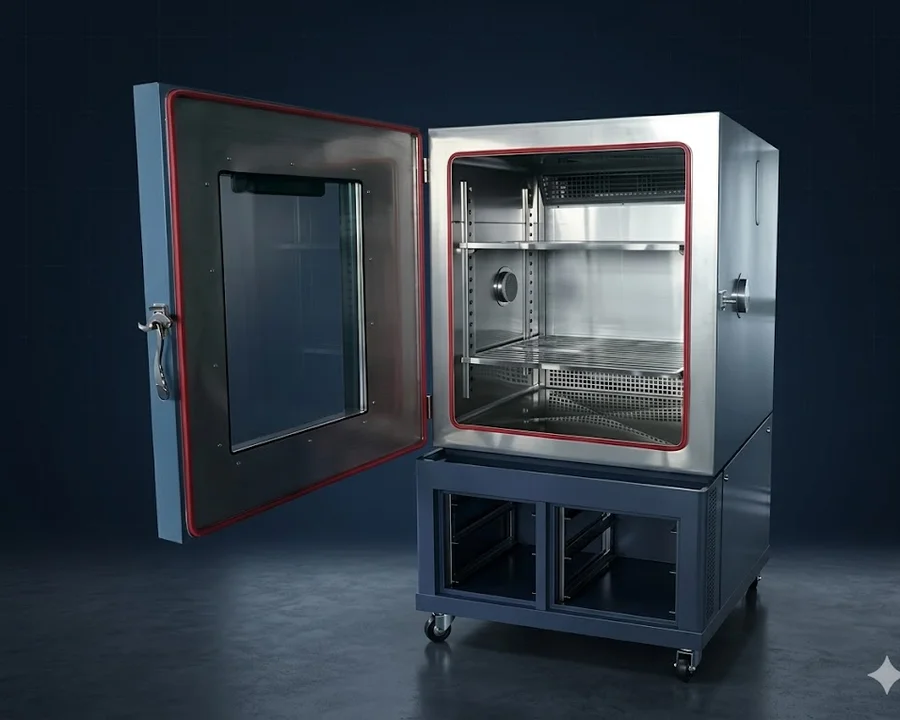
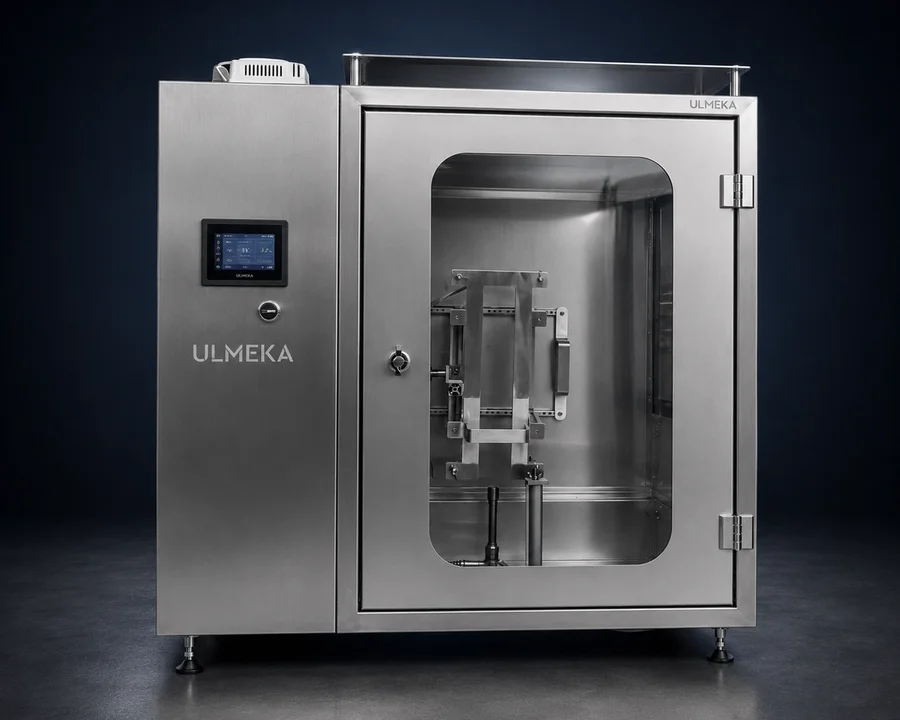
ULMEKA designs and manufactures the climatic and corrosion test chambers behind many of these methods: cold and dry heat, change of temperature and thermal shock, cyclic and steady-state damp heat, and salt mist, built as standalone units or as combined climatic systems that carry several of the climatic parts in one machine. The mechanical methods, the sinusoidal and random vibration of 60068-2-6 and 60068-2-64 and the shock of 60068-2-27, run on dedicated shaker and impact systems; we reference them here because they belong in the same test plans, not because they are part of our build. The series describes the methods; what a particular programme needs, from chamber size to the exact severities and instrumentation, is settled at the quotation stage against the standard editions and the severities that programme actually invokes.
Sistemas de ensayo relacionados.
Sistemas de ensayo →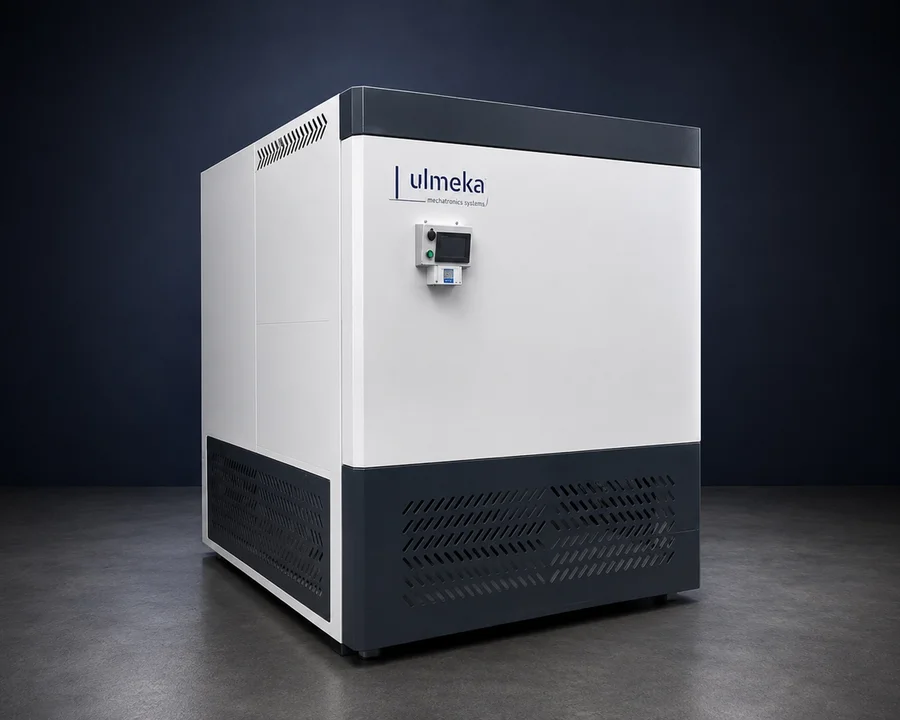
Preguntas frecuentes.
What does IEC 60068-2 actually standardise?
It standardises how an environmental test is run, not whether a product must pass it. A 60068-2 part tells you what stress to apply, how to apply it and how tightly the instrumentation must hold its tolerances, so the result is repeatable. It does not assign your equipment to a category and it does not set a pass/fail limit. Those decisions belong to the product committee, the procurement specification or the end user. The series is a toolbox; the verdict comes from whoever picked the tools.
Why do MIL-STD-810, DO-160 and ISO 16750 reference IEC 60068-2 instead of defining their own tests?
Because the underlying procedure is the same regardless of which framework sent you there. MIL-STD-810 often cites a 60068-2 procedure or defines a parallel one on the same principles, DO-160 reaches back to it for vibration and shock, and ISO 16750 references its climatic and mechanical procedures for road-vehicle equipment. Product-specific IEC standards such as IEC 61215 do the same. Recognising that common ancestor saves you from treating two requirements as wholly separate campaigns when one chamber, configured differently, can answer both.
How do the climatic methods in the series differ from one another?
They split into temperature, humidity and corrosion families. Cold (60068-2-1) and dry heat (60068-2-2) are steady-state soaks at low and high temperature. Change of temperature (60068-2-14) handles transitions, with Method Na for rapid thermal shock in two chambers and Method Nb for gradual change in one. For moisture, cyclic damp heat (60068-2-30) runs 24-hour cycles with condensation, steady-state damp heat (60068-2-78) holds constant humidity for a long duration, and composite cyclic (60068-2-38) combines temperature and humidity. Corrosion is covered by cyclic salt mist (60068-2-52) and continuous salt mist (60068-2-11).
What is the difference between sinusoidal and random vibration in the series?
Sinusoidal vibration (60068-2-6) drives the specimen at a single frequency swept through a band, commonly at one octave per minute along three orthogonal axes under closed-loop control. Single-frequency excitation is not what most transport environments look like. Broadband random vibration (60068-2-64) reproduces a spectrum defined by a power spectral density profile applied to each orthogonal axis for a specified duration. Random vibration is generally the more realistic representation of a service environment, and it is the one defence, aerospace and automotive electronics tend to call out.
Which three decisions drive the cost of an IEC 60068-2 campaign?
Severity selection, procedure selection and sequence design. Severity is the environmental class from the preferred series weighed against real service conditions; over-specify and you pay for chamber time you do not need, under-specify and the qualification does not represent the field. Procedure selection means choosing the right internal branch, such as Method Ab versus Ad or Na versus Nb, because the wrong branch can yield a clean pass that means nothing. Sequence design fixes the order in which climatic and mechanical methods run, since that order changes the failure modes you observe.
Which of these methods does ULMEKA build equipment for?
ULMEKA designs and manufactures the climatic and corrosion test chambers behind many of these methods: cold and dry heat, change of temperature and thermal shock, cyclic and steady-state damp heat, and salt mist, as standalone units or as combined climatic systems carrying several climatic parts in one machine. The mechanical methods, the sinusoidal and random vibration of 60068-2-6 and 60068-2-64 and the shock of 60068-2-27, run on dedicated shaker and impact systems; they are referenced here because they belong in the same test plans, not because they are part of the ULMEKA build.
ULMEKA diseña sistemas de ensayo
según especificación.
Si su requisito queda fuera de este catálogo —tamaños de cámara personalizados, integración de normas combinadas o perfiles de ensayo a medida— hable con nuestro equipo de ingeniería.