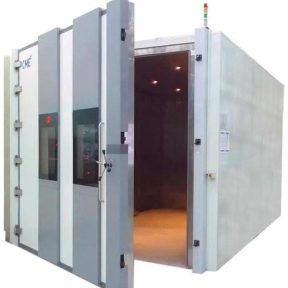
DO-160 Low Pressure (High Altitude) (Section 4) Test Device
What is the DO-160 Low Pressure (High Altitude) Test?
The DO-160 standard was developed to test the environmental durability of electronic equipment used in the aerospace and aviation industries. Section 4 of this standard covers the Low Pressure (High Altitude) Tests, which evaluate the equipment’s resistance to low pressure and high altitude. This test is applied to analyze the effect of altitude changes encountered during aircraft operations on device performance.
Low Pressure (High Altitude) Tests in the DO-160 Standard
The Low Pressure Tests defined under DO-160 Section 4 are also related to the following standards:
- IEC 60068-2-13 (Low pressure tests)
- MIL-STD-810H Method 500.6 (High altitude tests)
- RTCA/DO-160G Section 4.0 (Low pressure resistance test)
These tests are applied to determine whether devices can maintain their mechanical integrity and functionality against pressure changes.
Test Purpose
Low Pressure Tests are conducted to measure the operability of aerospace electronics at high altitudes and under low atmospheric pressure. They are applied to assess potential risks such as air leaks, gasket deformations, component expansions, and electrical failures.
How are DO-160 Low Pressure (High Altitude) Tests Conducted?
The Low Pressure Tests are carried out in the following stages:
- Preparation: The device to be tested is placed in a pressure test chamber.
- Pressure Levels: The device is subjected to simulated different pressure conditions, from sea level to 15,000 meters.
- Test Duration: The exposure duration to low pressure is adjusted according to the specified operational requirements.
- Operating and Storage Conditions: The device’s low pressure tolerance is evaluated under both operating and storage conditions.
- Performance Evaluation: After the test, the device’s structural and functional integrity is checked.
Applications of the Test
DO-160 Low Pressure (High Altitude) Tests are applied to the following equipment:
- Aerospace electronics (avionic systems)
- Internal and external sensors
- In-flight control and monitoring systems
- Radar and navigation systems
Results of the DO-160 Low Pressure (High Altitude) Test
The test result evaluates the device’s mechanical integrity and operational reliability. Gasket sealing, component strength, and electrical failures are analyzed. Successfully passing the test indicates that the device can safely operate under high altitude and low atmospheric pressure conditions.
Conclusion
The Low Pressure (High Altitude) Tests conducted under DO-160 Section 4 are critical for ensuring the safety of aerospace electronics and other essential equipment. This test guarantees that devices will be resistant to low pressure conditions they may encounter during flight.
You can contact us for more detailed information on the DO-160 Low Pressure (High Altitude) (Section 4) Test Device and to place an order in custom sizes according to your needs.