
IEC 60529 and the IP Code: Reading Degrees of Protection Correctly.
IEC 60529 is the standard behind a string every engineer recognises and few read carefully: IP65, IP67, IP2XD. It defines the IP Code — Ingress Protection — a classification for the degree of protection an enclosure provides against two quite different threats: solid foreign objects, including dust, and water. It is an unusual document, because it isn't really a test standard in the way a fire or impact standard is. It is a notation — a compact grammar for stating, in two numerals and a couple of optional letters, what an enclosure has been shown to keep out. The apparatus exists to fill that notation in.
That distinction matters because the IP Code is read far more often than it is measured. A specifier picks IP54 off a datasheet without running a single test. A buyer comparing IP66 against IP67 isn't measuring anything either — and neither is the auditor checking a mark against a product file. They are all parsing a code, and most of the recurring mistakes here are reading errors, not testing errors. This article is about reading the code correctly: what each position means, where the labour is divided with neighbouring standards, and the handful of misreadings worth settling with a team once.
Where IEC 60529 ends and its neighbours begin
IEC 60529 sets the protection grades and the conditions under which each is verified. It does not, by itself, hand you the physical objects you push at an enclosure. Those come from IEC 61032, which specifies the standardised test probes — the rigid sphere, the jointed test finger, the rigid pins and the test wires — with defined geometry and a defined application force. The division is clean: 60529 says what protection a "finger" or "wire" level represents; 61032 is the finger and the wire. A probe set built to 61032 is interchangeable between makers because the dimensions and forces are fixed in that standard rather than left to the test house.
The second neighbour is ISO 20653, the road-vehicle version of the IP Code. It shares the same backbone but extends the water side for vehicles that face intensive cleaning, adding powerful-jet and high-pressure, high-temperature jet tests. The close-range high-pressure test most people know as IPx9K originates there. IEC 60529 itself gained a code 9 through a later amendment, so the base code lives in 60529 while the road-vehicle severities and the "K" lineage belong to ISO 20653. The two are aligned but not identical, and a marking should trace to whichever document was applied.
IP testing rarely travels alone. Climatic conditioning methods from the IEC 60068-2 series are frequently combined with ingress testing, and the IP grades are invoked from above by product-safety standards — IEC 60335 for household appliances, IEC 60598 for luminaires, IEC 60884 for plugs and socket-outlets, IEC 60601 for medical electrical equipment. None of those redefine the IP Code; they reference it for their enclosures. So when a product file cites IP54, the requirement usually arrived through one of those product standards, and 60529 is the dictionary it was read from.
The grammar of the code
A full IP designation reads as the letters IP, then a first characteristic numeral, then a second, then up to two optional letters. The first numeral runs 0 to 6 and covers solids and dust; the second runs 0 to 9 (with 9K in road-vehicle usage) and covers water. Where a characteristic has not been specified or declared, its numeral is replaced by the letter X — IPX7 states a water result with nothing claimed about solids, IP6X the reverse. The optional letters carry the finer detail about access and test conditions.
First numeral — solids, and access to hazardous parts
The first numeral does two jobs at once, and this dual meaning is the most useful thing to understand about the whole code. It rates protection against the ingress of solid foreign objects, and protection of persons against access to hazardous parts inside. The same digit speaks to "will a wire get in" and "can a finger reach the live part".
- 0 — no protection.
- 1 — solid objects of 50 mm and larger; access with the back of the hand.
- 2 — objects of 12.5 mm and larger; finger access.
- 3 — objects of 2.5 mm and larger; tool access.
- 4 — objects of 1.0 mm and larger; wire access.
- 5 — dust-protected: limited ingress permitted, but not enough to interfere with operation.
- 6 — dust-tight: no ingress of dust.
Notice the break in character between 4 and 5. Up to 4 the criterion is a discrete object of a given size being kept out, verified with a probe. At 5 and 6 it shifts to fine dust in a chamber, where the question is no longer "did the object enter" but "did harmful quantities of dust accumulate". The two halves of the first numeral are checked by entirely different rigs.
Second numeral — water
The second numeral describes water protection. Read it not as a single rising scale of "wetness" but as a sequence of distinct tests, each with its own apparatus.
- 0 — no protection.
- 1 — vertically dripping water.
- 2 — dripping water, enclosure tilted up to 15 degrees.
- 3 — spraying water up to 60 degrees from vertical.
- 4 — splashing water from any direction.
- 5 — water jets from a 6.3 mm nozzle.
- 6 — powerful water jets from a 12.5 mm nozzle.
- 7 — temporary immersion, typically 1 m depth for 30 minutes.
- 8 — continuous immersion under agreed conditions, deeper or longer than IPX7.
- 9 (and 9K in road-vehicle usage) — close-range, high-pressure, high-temperature water jets.
Code 8 breaks the tidy ladder. It has no single fixed condition, because the depth and duration are negotiated between manufacturer and user and then recorded. Two products both marked IPX8 may have been tested to quite different severities, which is why an IPX8 claim means little without the agreed conditions written next to it.
Additional and supplementary letters
The optional letters are where engineers most often skim, and they are exactly where the first numeral's dual meaning gets resolved. An additional letter — A, B, C or D — states protection against access to hazardous parts when that protection is higher than the first numeral alone would imply, using the same IEC 61032 probes as the object check:
- A — back of the hand (the 50 mm sphere).
- B — finger (the jointed test finger).
- C — tool (a 2.5 mm pin).
- D — wire (a 1.0 mm probe).
So IP2XD reads as: object protection only to the 12.5 mm (finger) level, but access protection all the way down to the wire level. The enclosure lets in objects a wire could not stop, yet a fine wire still cannot reach a hazardous part. Without the additional letter there would be no way to state that combination — the second numeral is busy with water, and the first carries only one value.
A supplementary letter — H, M, S or W — adds information about the equipment or the test rather than the grade. H marks high-voltage apparatus. M and S record whether the equipment was energised and moving (M) or stationary (S) during the water test, which matters when a moving part changes how water finds its way in. W indicates that the rating applies under specified weather conditions. These letters turn up in some product families and are absent in most consumer ratings, where the two numerals stand alone.
The apparatus that fills in the code
Solids and access at the lower levels are verified with the IEC 61032 probe set, applied with the standard's defined force and, where access is being checked, watched to confirm the probe cannot touch a hazardous part. Dust protection (first numeral 5 and 6) moves into a dust chamber using fine talcum powder kept in suspension. The standard distinguishes two categories of dust test. Category 1 draws a pressure differential — a partial vacuum — through the enclosure, actively pulling air and dust inward; this is the more onerous case, used where the enclosure's normal operation could create such a depression. Category 2 applies no vacuum and is used where the enclosure does not breathe in service. Which applies is not a free choice; it follows from how the enclosure behaves in use, and confusing the two leads to either an unfair pass or a needless fail.
Water protection is verified with whichever rig matches the second numeral: a drip box for IPX1 and IPX2, an oscillating tube or spray apparatus for IPX3 and IPX4, calibrated jet nozzles for IPX5 and IPX6, an immersion tank for IPX7 and IPX8, and a high-pressure heated-jet system for the close-range IPx9K severity. Each rig embodies a different physical mechanism, and that difference is the root of the misreadings worth flagging.
Three misreadings that keep costing money
The first and most consequential: IPX7 and IPX8 do not imply IPX5 or IPX6. Immersion and jetting are different tests probing different failure paths. A sealed device can survive being held under water yet leak under a directed jet that drives water past a gasket lip, and the reverse is equally possible. An enclosure that must withstand both is given a dual rating — written, for example, IPX6/IPX7 — because neither numeral on its own covers the other.
Different tests. Different failure paths. One numeral cannot speak for the other.
The second is treating X as zero. X means "not specified" or "not declared", not "no protection". IPX7 makes no claim about solids; it does not assert IP0X. If solids protection matters for the application, an X is a gap in the information — ask for the missing numeral rather than assume the worst or the best.
The third is forgetting that the first numeral carries two meanings. An additional letter is the signal that access protection and object protection have diverged: read the letter rather than infer access from the numeral. Get these three points across once and a team will read almost any IP designation correctly.
Engineering implications when you plan
Specify from the real exposure, not from a number you would like to print: a higher numeral means a different test was passed, not necessarily "more" protection for your environment, and the honest answer may be a dual rating. It is just as important to keep in view what the IP Code leaves out. It says nothing about corrosion, nothing about mechanical impact, nothing about the chemistry of the fluid — plain water is the test medium, not an aggressive or salt-laden one. Harsh environments therefore often need the IP grade plus something else: corrosion-resistant materials, a separate mechanical-impact rating, or climatic conditioning from the IEC 60068-2 methods run alongside the ingress test. And because IPX8 is defined by agreement, an IPX8 line in a specification is incomplete until the depth and duration behind it are written down. Decide early which document governs — IEC 60529 or ISO 20653 — since the road-vehicle severities and the K lineage change both rig and marking.
Where ULMEKA fits
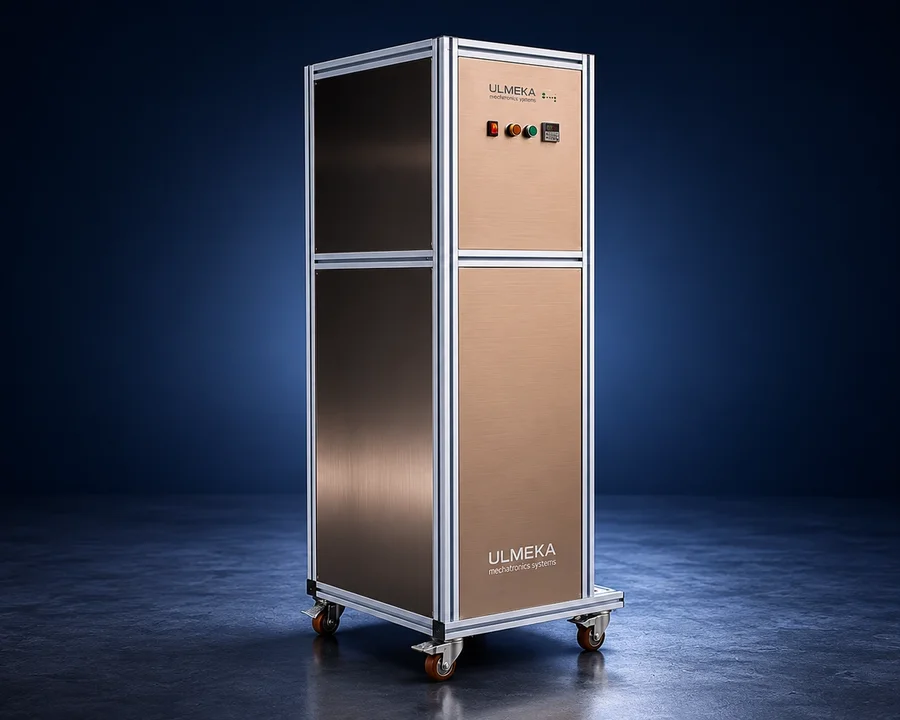
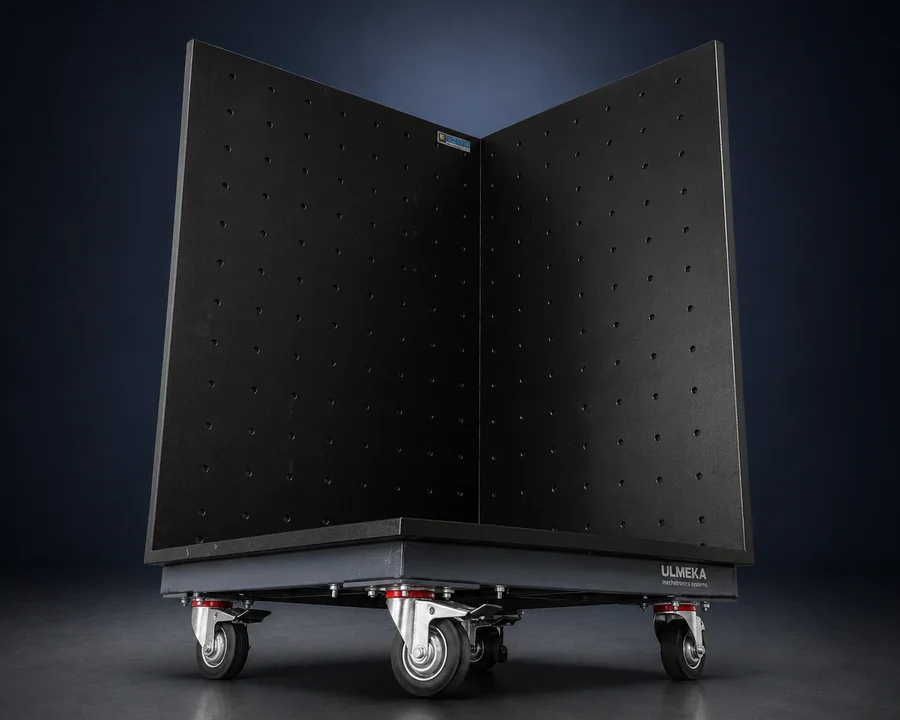
ULMEKA Mechatronics designs and manufactures the test equipment that turns these code positions into a defined, repeatable test. On the water side that runs from drip boxes for IPX1 and IPX2 through oscillating-tube and spray rigs for IPX3 and IPX4, jet-nozzle rigs with the 6.3 mm and 12.5 mm nozzles for IPX5 and IPX6, immersion tanks for IPX7 and IPX8, to high-pressure, high-temperature IPx9K systems. On the solids side we build dust chambers for the IP5X and IP6X levels and the full IEC 61032 access and object probe set. These come as standalone rigs or combined chambers, with the exact configuration — nozzle sizes, chamber category, immersion depth, probe complement — clarified at the quotation stage against the standard the product is being marked to.
Related test systems.
Test Systems →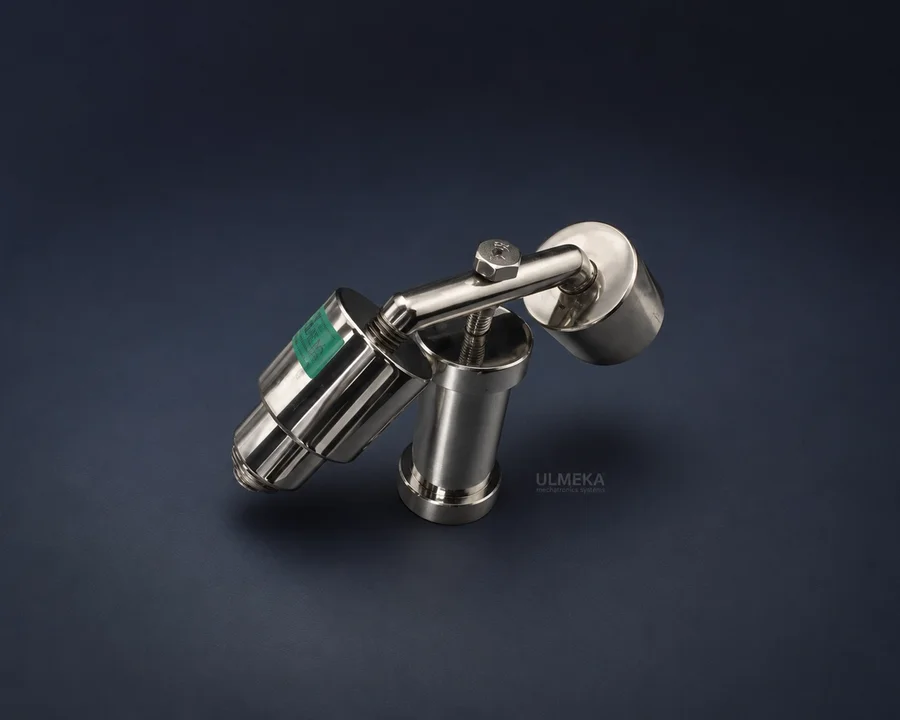
Frequently asked questions.
What do the two numerals in an IP code mean?
The first numeral (0 to 6) covers protection against solid foreign objects, including dust, and at the same time protection of persons against access to hazardous parts. The second numeral (0 to 9, with 9K in road-vehicle usage) covers protection against water, ranging from vertically dripping water up to close-range high-pressure, high-temperature jets. Where a characteristic is not specified or declared, its numeral is replaced by the letter X.
Does IPX7 or IPX8 also mean a product is protected against water jets?
No. IPX7 and IPX8 cover immersion, which is a different test from the jetting covered by IPX5 and IPX6, and they probe different failure paths. A device can survive immersion yet leak under a directed jet, or the reverse. An enclosure that must withstand both is given a dual rating, written for example as IPX6/IPX7, because neither numeral on its own covers the other.
What is the difference between an additional letter and a supplementary letter?
An additional letter (A, B, C or D) states protection against access to hazardous parts when that protection is higher than the first numeral alone implies, using the IEC 61032 probes for the back of the hand, finger, tool and wire. A supplementary letter (H, M, S or W) adds information about the equipment or the test, such as high-voltage apparatus, whether the device was moving or stationary during the water test, or specified weather conditions.
How do IEC 60529, IEC 61032 and ISO 20653 divide the work?
IEC 60529 sets the protection grades and the conditions for verifying each one. IEC 61032 specifies the physical probes - sphere, jointed test finger, pins and wires - that turn the first-numeral and additional-letter requirements into a repeatable test. ISO 20653 is the road-vehicle version of the IP Code, which extends the water side with powerful-jet and high-pressure jet severities and is where the IPx9K lineage originates.
What does X mean in an IP code such as IPX7 or IP6X?
X means that the characteristic in that position has not been specified or declared. It does not mean zero protection. IPX7 makes no claim about solids and does not assert IP0X, while IP6X states dust-tightness with nothing claimed about water. If the missing characteristic matters for the application, an X is a gap in the information to be asked about, not a stated failure.
What does the IP Code deliberately leave out?
The IP Code says nothing about corrosion, nothing about mechanical impact, and nothing about the chemistry of the fluid, since plain water is the test medium. Harsh environments therefore often need the IP grade plus something else - corrosion-resistant materials, a separate mechanical-impact rating, or climatic conditioning from the IEC 60068-2 methods run alongside the ingress test.
ULMEKA engineers test systems
to specification.
If your requirement is outside this catalogue — custom chamber sizes, combined-standard integration, or tailored test profiles — talk to our engineering team.