


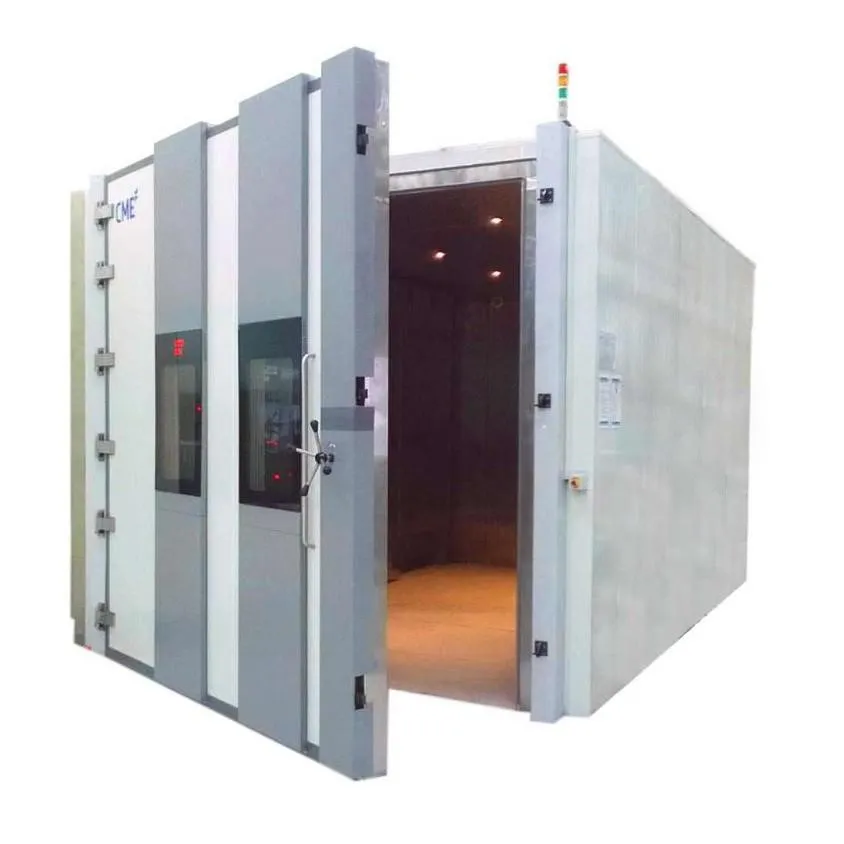
EN 60598-1, Luminaires – Part 1: General requirements and tests is the standard that defines the general safety requirements and test methods for lighting fixtures. This standard is the European Union-adopted version of IEC 60598-1 and is applied to ensure the safety of all lighting equipment.
Content
This standard defines the safety features and performance requirements for the following lighting devices:
- Fixed Luminaires Devices mounted on fixed surfaces such as walls, ceilings, or floors.
- Portable Luminaires
- Decorative Luminaires Chandeliers, sconces, etc.
- Luminaires with Built-in Power Supply Devices with integrated power systems, such as LED-driver luminaires.
- Outdoor Luminaires Devices that are dust- and water-resistant, typically with IP65 or higher protection ratings.
- Emergency Lighting Systems Safety and emergency lights used during power outages.
Tests Included in the Standard
EN 60598-1 includes various testing procedures to assess whether devices are compliant with safety standards:
- Mechanical Durability Tests The device’s resistance to physical shocks and vibrations.
- Thermal Tests Resistance to heat and evaluation of overheating situations.
- Electrical Tests Grounding, insulation, and short circuit tests.
- IP Code Tests The degree of protection against dust, water, and external factors.
- Photometric Tests Light distribution and performance measurements.
- Fire Risk Assessment Protection against fire hazards that could arise from overheating or electrical failures.
Types of Devices Covered in the Standard
Since EN 60598-1 defines the basic safety rules for all types of lighting fixtures, the following devices fall within the scope of this standard:
- LED lamps and luminaires.
- Fluorescent lamps.
- Halogen lamps.
- Energy-efficient lamps.
- Solar-powered lamps.
- Industrial lighting systems.
- Outdoor projectors and decorative lighting fixtures.

Test Devices for EN 60598-1 Standard
The IP tests in EN 60598-1 check whether the devices are compliant with the Ingress Protection (IP) rating. The devices used to perform these tests are listed below:
- Dust and Solid Object Protection Test Devices (First digit: 0-6)
- Dust Test Cabinet Valid for IP5X and IP6X levels. The device is exposed to standardized dust particles to test its resistance to dust.Inside the cabinet:
- Controlled airflow.
- Standard dust (e.g., talc or cement dust).
- Small Solid Object Entry Test Probes Special test probe sets:
- Ø50 mm sphere (for IP1X).Ø12.5 mm, Ø2.5 mm, and Ø1 mm test probes (for IP2X, IP3X, and IP4X).
- Dust Test Cabinet Valid for IP5X and IP6X levels. The device is exposed to standardized dust particles to test its resistance to dust.Inside the cabinet:
- Liquid Protection Test Devices (Second digit: 0-9)
- Drip Test Device (for IPX1 and IPX2) The fixture is tested under a controlled dripping mechanism.
- Drip device: Drops water evenly from holes with a diameter of 1 mm.
- Can be tested at angles of 15°.
- Spray Test Device (for IPX3 and IPX4)
- Testing is done using a spray rod or rotating pipe.
- Key equipment: Water spray pipes with holes placed between 120° and 180°.
- Adjustments for different pressure and flow rates.
- High-Pressure Water Test (for IPX5 and IPX6)
- A water jet nozzle is used.
- Key parameters:
- Nozzle diameter: 6.3 mm (IPX5) and 12.5 mm (IPX6).
- Pressure: 30 kPa – 100 kPa.
- Water flow: 12.5 liters/minute (IPX5) and 100 liters/minute (IPX6).
- Key parameters:
- Water Immersion Test Device (for IPX7 and IPX8) Test tanks
- The device is immersed in water for testing.Depth and time are controlled (e.g., 1 meter depth for 30 minutes).
- Special pressurized tanks.
- Vapor and Humidity Test Cabinets (for IPX9)
- High-pressure and high-temperature water spray devices.
- Tests: Water spray at 80°C.
- Drip Test Device (for IPX1 and IPX2) The fixture is tested under a controlled dripping mechanism.
- Control and Monitoring Equipment
- Water pressure and flow measurement devices: To check nozzle output.
- Precision timers: For accurate control of test durations.
- Humidity and temperature sensors: For monitoring environmental conditions.
- Data recorders and cameras: To capture data during testing.
Laboratory Setup Considerations
- All devices must comply with IEC 60529 and EN 60598-1 standards.
- Test devices should be regularly calibrated.
- Tested equipment should be evaluated in accordance with its IP protection rating.
At ULMEKA Mekatronik Engineering Ltd., we are dedicated to carefully and meticulously producing test devices in compliance with the EN 60598-1 standard and other IP test devices tailored to your specific needs. You can contact us for custom-sized test devices and machine automation systems that meet your requirements.